
Loading...
Serving Edinburg, TX and surrounding areas. (956) 603-1615
Edinburg Sunrooms& Patios
Edinburg Sunrooms & Patios has served the Rio Grande Valley since 2018, building four season sunrooms, patio enclosures, and screen rooms on San Juan homes. Every project is permitted through the City of San Juan and backed by a workmanship warranty.
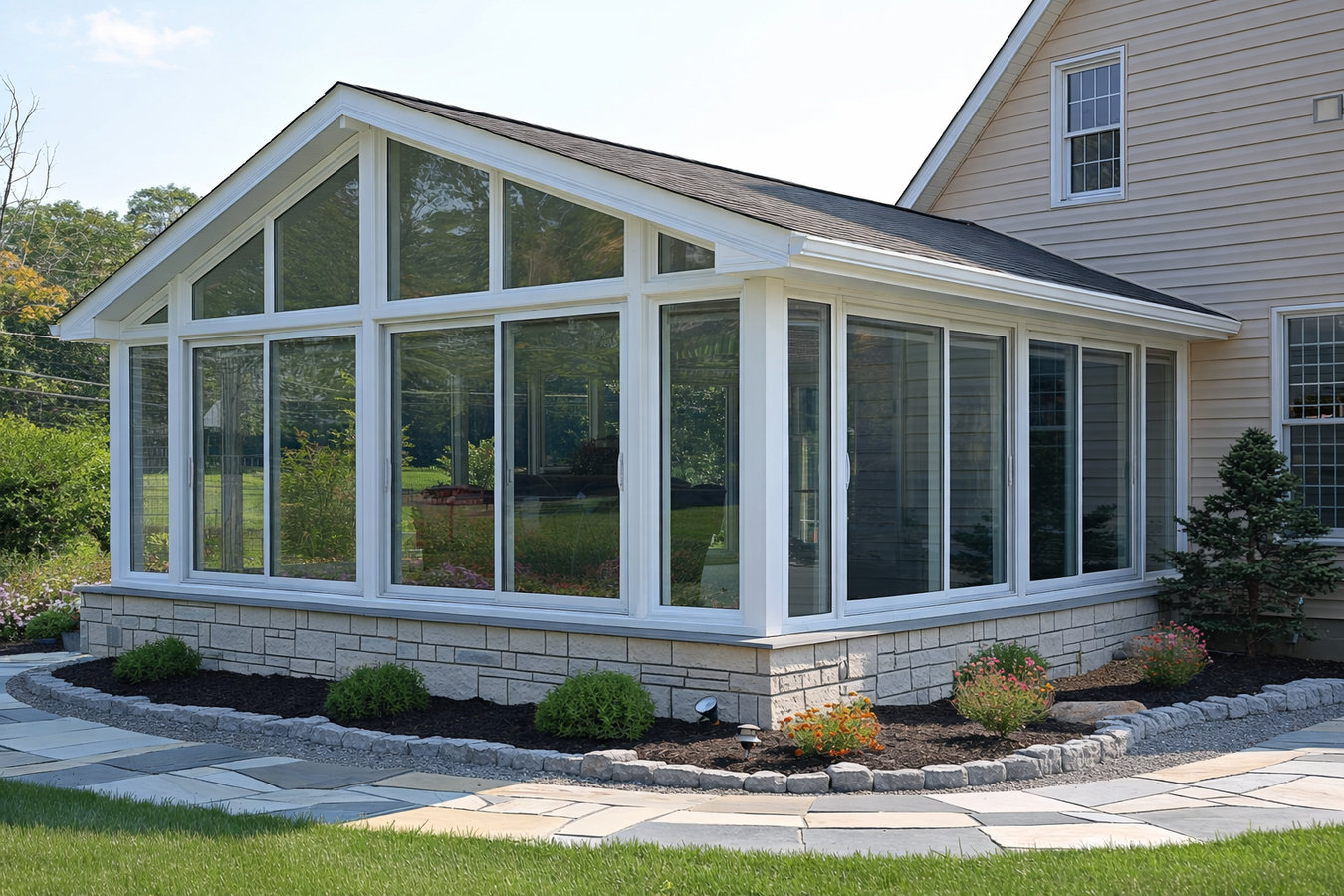
San Juan summers push well past 100 degrees for months at a time, so a sunroom without dedicated climate control becomes unusable from June through September. Our four season sunrooms use low-e glass and a dedicated mini-split unit so your new room stays comfortable all twelve months - not just the cooler half of the year.
Many San Juan homes were built with uncovered or partially covered concrete patios that have never been enclosed. A patio enclosure adds walls, screens, or glass to what is already there - no new foundation pour required in most cases. With mosquitoes active well into fall and heavy tropical downpours common in late summer, an enclosed patio gives your family a protected space to use year-round.
San Juan's mild winters make screen rooms genuinely usable from October through April, which is one of the longest comfortable outdoor seasons in Texas. A screen room lets evening breezes through while keeping insects out - a practical solution for homeowners who want to enjoy the yard without fighting gnats and mosquitoes every night.
Adding a sunroom to a San Juan home built on clay soil requires careful foundation preparation from the start. The soil here swells when it rains and contracts during dry periods, and that movement causes gaps and cracks if the new structure is not anchored and detailed correctly. Getting that step right is the difference between a room that holds up and one that needs repairs within five years.
A solid patio cover cuts heat load off the back wall of a San Juan home and extends your usable outdoor season well into spring and fall. For homeowners who are not ready for a full enclosure, a patio cover is a practical first step that makes outdoor time comfortable from March through May and again in October.
Vinyl frames hold up well to South Texas humidity and require no repainting even after years of direct sun exposure. For San Juan homeowners who want a low-maintenance enclosure that will not fade, warp, or need seasonal touch-ups, vinyl is a practical choice that performs reliably in this climate.
San Juan sits in the middle of Hidalgo County, one of the hottest parts of Texas. Summers here are intense - temperatures regularly top 100 degrees Fahrenheit from June through August, and even late spring and early fall see temperatures in the mid-90s. Building materials rated for average Texas conditions often degrade faster here than manufacturers project, because the UV intensity and heat duration in deep South Texas are different from what most product specs assume. Glass units, exterior caulk, and roofing panels installed without UV-specific ratings will fail ahead of schedule. A contractor who accounts for this from the start uses the right materials and installs them correctly the first time.
The housing stock in San Juan spans a wide range - older brick and stucco homes built in the 1970s and 1980s near the city center, and newer subdivisions added on the north and west edges of town from the 2000s onward. Homes across the city sit on concrete slab foundations, which is the standard in South Texas. The heavy clay soil under those slabs expands with rain and contracts during dry weather, and that repeated movement is one of the main reasons slab-on-grade additions crack and separate if the foundation work is not done right. February 2021's Winter Storm Uri also reminded many San Juan homeowners that even a brief hard freeze can cause real damage to pipes and outdoor fittings that were never designed for cold.
Our crew works throughout San Juan regularly, and we understand the local conditions that affect sunroom contractor work here. We pull permits from the City of San Juan and have worked on homes from the older streets near the city center to the newer residential developments on the edges of town. San Juan sits just off US Highway 83, which most locals call the Military Highway, and the neighborhoods on both sides of that corridor include homes of very different ages and construction styles.
We are familiar with the slab-on-grade homes with brick and stucco exteriors that make up most of San Juan's housing stock. The Basilica of Our Lady of San Juan del Valle is the city's most recognizable landmark, and the neighborhoods surrounding it have some of the city's older residential properties. Homes further north and west are newer, and many have standard covered patios that are good candidates for enclosures or screen rooms without a full foundation pour.
We serve homeowners throughout the Valley. Clients in nearby Alamo deal with the same soil conditions and permit process, and we handle those projects with the same attention. We also work regularly in Pharr, just to the west, where housing density and lot layouts are similar to what we see in San Juan.
We respond within one business day. The first conversation covers how you plan to use the space, your home's layout, and your general budget - no sales pressure at this stage.
We visit your San Juan property, measure the space, and check the existing foundation and wall conditions. You get a written estimate before we leave - no verbal quotes that shift later.
We submit the permit application with the City of San Juan and schedule construction once approval comes through. Permit timing typically runs two to four weeks and is included in the project plan.
Our crew completes the work and schedules required city inspections. You do not need to be present for every stage, but we walk you through the finished room before we close out the project.
We serve homeowners throughout San Juan, TX. Call us or send a message and we will respond within one business day with a free estimate.
(956) 603-1615San Juan is a city of about 38,000 people in Hidalgo County, located in the heart of the Rio Grande Valley just east of McAllen and west of Pharr along US Highway 83. It is a majority-owner-occupied community with deep Valley roots and a housing stock that ranges from older brick homes near the city center to newer subdivisions added on the outskirts over the past two decades. The city is best known regionally for the Basilica of Our Lady of San Juan del Valle, a national Catholic shrine that draws hundreds of thousands of visitors each year and gives the city a distinct identity within the Valley.
Most homes in San Juan sit on concrete slab foundations with brick or stucco exteriors - construction methods well-suited to the dry heat but requiring the right installation techniques when a new room addition is attached. The city borders McAllen to the west and Pharr to the east, making it easy for residents to access services across the broader metro area. Homeowners here take a practical approach to home improvements, and the combination of affordable housing values and a strong sense of community ownership makes San Juan a city where long-term investments in a property hold up. Residents in nearby Pharr and Alamo share similar housing stock and face the same local conditions.
Schedule your on-site visit now and get a written estimate before any work begins. Spaces fill up fast, especially heading into the cooler season.